
Four friends, one dream. That’s how Food Maveriks began, intending to be one of India’s largest R&D-first food technology companies. Saijo John, co-founder, talked to us about the challenges, background, and goals of the company.
Food Maverik Labs is a food technology company, innovating, formulating, and licensing food and beverages, nutraceuticals, and pharmaceuticals. It is an R&D lab where they commercialise the food technologies that they have perfected. With four co-founders, each of them brings their expertise to the company—Saijo is involved in marketing and finance as the Vision Driver, Dinesh is the Food Tech and Innovation Lead, George is the Operations and Revenue Strategist, and Sundar is the Seaweed Research and Product Innovation Specialist.
Their primary focus is on healthy and functional food and beverages like kombucha, probiotics, prebiotics, and protein-based items, to name a few. “We have a team of 7 now, along with a larger team of experts across various fields. I used to work at Ernst & Young, but I always wanted to do something on my own, related to something that is connected to the core of human existence—food, medicine, shelter, and clothing. I wanted something to do in the agro space, and here I am in food technology,” Saijo smiles.
 Sundar Raj, George K P, Dinesh K and Saijo John
Food Maverik Labs has a separate brand called ZCorp, where, since 2018, they’ve been working on researching and promoting the benefits of seaweed. “Studies show that the lifespan of people in East Asia is higher than usual, owing to their regular intake of seaweed. It is one of the most nutrient-dense, complex, plant-based ingredients, with 70+ micronutrients, vitamins, minerals, antioxidants, and is rich in fibre. Overall, it is highly beneficial for improving and fixing gut health. Recently, our government announced that they want to build on India’s blue water economy, that is, seafood and seaweed. Wherever there are corals, there is scope to cultivate and find wild seaweed—Rameshwaram, Gujarat, Lakshadweep, and Andaman and Nicobar,” Saijo explains.
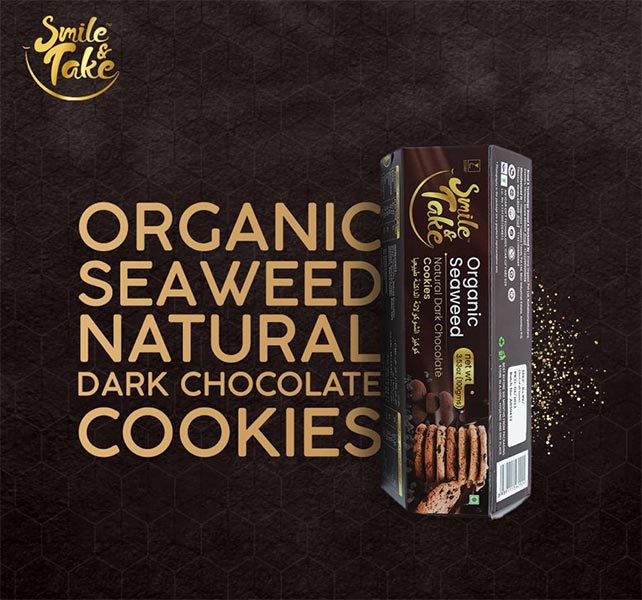
Although seaweed isn’t an innate part of the flavourful Indian diet, you don’t have to import it, he clarifies. There are several varieties native to India which can be used and fortified in Indian dishes for their nutritional value. The key is to localise seaweed, create awareness, and make it more palatable to Indian tastes. The team is aiming to add the nutritional values of seaweed into everyday food, making it less of a challenge to consume it regularly; they call their mission ‘Indianising seaweed’. They did a pilot run for seaweed cookies by extracting the essential nutrients and removing the fishy taste and odour from a specific variety called sea grapes, and they were a hit! High fibre and high protein, adding nutrition to delicious cookies. A simple, yet effective idea, derived as a result of a steep learning curve.

“The biggest lesson we learned is that consumer tastes and habits are hard to change. We realised that asking people to go from what they’re used to eating to something completely different just because it’s labelled ‘healthy’ is not feasible. We want to add nutritional value to the food that we eat and refuse to stop. India is huge on snacking, after all,” he laughs. “It’s impossible to bring about an alternative to tea or coffee. Impossible is the only word for it. People have tried to introduce other options, but they’ve failed, big time. It’s always better to teach and follow, ‘Add, don’t subtract’.”
The team wants to become more educational and informative as they go into their eighth year. “Wholesome food alternatives are undoubtedly good, but it’s not enough to do just that; you need to supplement them with a healthy lifestyle, mental peace, and good sleep cycles. We want to educate first and innovate second. At the end of the day, brands are pushing for these healthy alternatives to improve society as a whole, push people to make better choices, and reduce lifestyle diseases.” It’s not done for selfish monetary gain, he persists, it’s done for the betterment of health. That is the philosophy the company wants to stick to in the coming years.
 Benefits of seaweed
The future of Food Maverik Labs, Saijo describes, is becoming an incubator and educator for startups, hopefully one of India’s largest. So far, they have innovated and developed formulations for over 30 companies and helped them achieve their goals. Their goal is to help at least 50 brands in the next five years that want to redefine and reformulate existing recipes and make them healthier.
Their winning formula is called ‘From Idea to Aisle’: a way for brands to develop the best versions of their products and also reach the right customers. Saijo walks us through the process: “We give clients everything they need from start to finish to research, initiate, develop, and market their brand. First, our technical team evaluates their idea, validates it, checks for commercial viability, supply and demand, and then we go for R&D. We also do a sensory analysis with multiple variations to see what works best. We do a pilot batch of the product and conduct a real-time market study. Next, we connect the clients to our network of offline distributors, or if they want to be online, we help them set up an e-commerce store. We provide all the necessary permits and permissions, as well as a marketing and branding strategy.”
Saijo details what they look for in a company: “Instead of looking for an entirely new product, we want them to look for something that enhances the nutritional value of already existing products. Take namkeens, for example; they are some of the most popular snacks. Instead of replacing it with something new, add value to the same product. That way, you won’t have to create a new market; you can optimise a product that already has a market. We want people to think out of the box. Don’t make it more confusing for people; make it relatable.” Innovation is one of the key factors that drives the founders forward.
Organic dark chocolate seaweed cookies
On the topic of what motivates the team to keep going, Saijo says, “This is necessary for our existence and survival. Anything that keeps the human race healthy and active and can continue to do so in the next generations, I am all for it. I was born in the 1990s, and most people my age have some health issues, whether it’s gut-related or otherwise. This massive change happened within one generation! Stress on natural resources, the rapid increase in population, and a necessity to mass produce food to meet growing demands are some major factors which led to corporations developing synthetic recipes to meet the growing market demands.”
He talks about the history of India’s food habits over the centuries. “The Industrial Revolution saw a calorie deficit and eating for survival. A large percentage of people were employed in manual labour and had to eat heavy meals to be able to take the brunt of being on their feet all day in factories and industrial plants. Now, with automated machines and advanced technology, that percentage has come down drastically, but eating habits haven’t changed. During wars, there was a dearth of basic nutrition and food security. The 1960s-70s saw the need for adequately feeding growing populations. During the 1980s-90s, food was abundant, but made with synthetic ingredients following rapid technological advancement, leading to lifestyle diseases. Cut to the present day, where brands are focusing on functional food and beverages, aiming to increase the nutritional value of existing products, promote an active lifestyle, and take preventative measures for longevity.”
Today, a high-calorie diet is unnecessary. Rather, the focus must be on micronutrients, nutrient availability, and maximising their impact. This is what pushes and motivates the Food Maverik Labs team to constantly innovate. Saijo concludes by saying the team is clear on one thing—they don’t want to change your habits, they want to optimise them.
For further details, check the Food Maveriks website www.foodmaveriks.com