
You can find management gyan notebooks or quirky coasters. You can buy sticky note holders, keyholders with moustaches, or funky tote bags that scream Namma Madras! And the twist? This line of products is made by neurodivergent children, women from rehab centres, and neglected artisans who are trying to keep their art alive. Founded by Shuba Kuila, Indian Twist brings tongue-in-cheek humour to everyday things that we use but don’t think much about. An advertising veteran brings a meaningful twist to her creativity.
Shuba’s been there, done that. Now, she wants to do more. After a successful career as a writer and branding/ creative professional for three decades, Shuba Kuila decided it was time to explore a different path. She took a break and stepped into the extraordinary, although it did not happen by design.
Shuba’s career began as a writer. She worked at leading advertising agencies in Chennai for many years before taking a break to focus on her family. She then ran her own all-women advertising agency called “The Ink Pot” for 17 years, supporting other mothers and women who had to leave their careers for various reasons. But soon it was time to hang up her advertising hat and move on.
It was no lightning bolt that brought her into business. It was mostly soul searching, past incidents, and interactions with neurodivergent people or their caretakers that prompted her to start this journey. She wanted to use her creativity to ensure that their art would be seen as competitive with mainstream market products, rather than be viewed through a charitable lens.
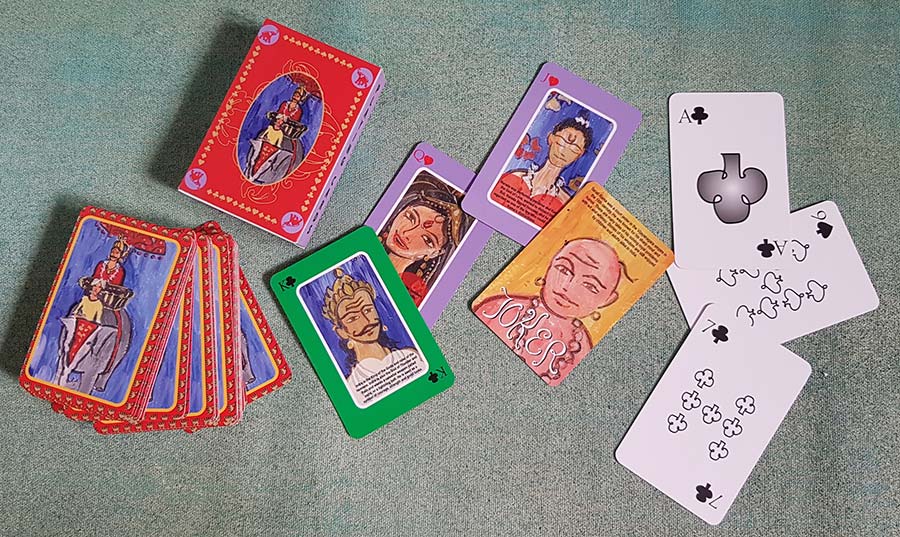 Playing cards
Shuba began by creating fun, funky stuff and knick-knacks with a Madras flavour, as gift items. Lighthearted one-liners, witty phrases, and even expert-approved ‘Madras bhashai’ (Madras language/ slang) have become a trademark for their products. Shuba decided to approach neurodivergent artists for the art, while she and her team of experienced designers would do the design and supervision. The first few products were very well received, and the foundation was laid for Indian Twist in 2018.
“Indian Twist is a platform for three different categories: for the neurodiverse, for women with mental health issues being rehabilitated in shelters, and for artisans who have downtime between commissions,” says Shuba. So, the ‘fun, funky stuff’ that Shuba creates is backed by their art and craft. Shuba set out to change perceptions, and “shift the goal-post, so to speak.” She felt that their art could, any day, compare to the art created by the neurotypical. Although she is very clear about one thing, and that is to sell these products for their aesthetic and creative value rather than play the sympathy card. And true to their name, once customers see the products, they just get it. A smile, a chuckle, the familiarity, and then, surprise, sometimes shock too—that these have been created by differently-abled people. “It’s only after I know the customer has liked the product that I tell them about the artist. Once I change the perception of the product, the value goes up, I can charge more, and therefore I will be able to pay them more,” she states emphatically. “That’s my ultimate goal, to create a good market, an equal market for them”.
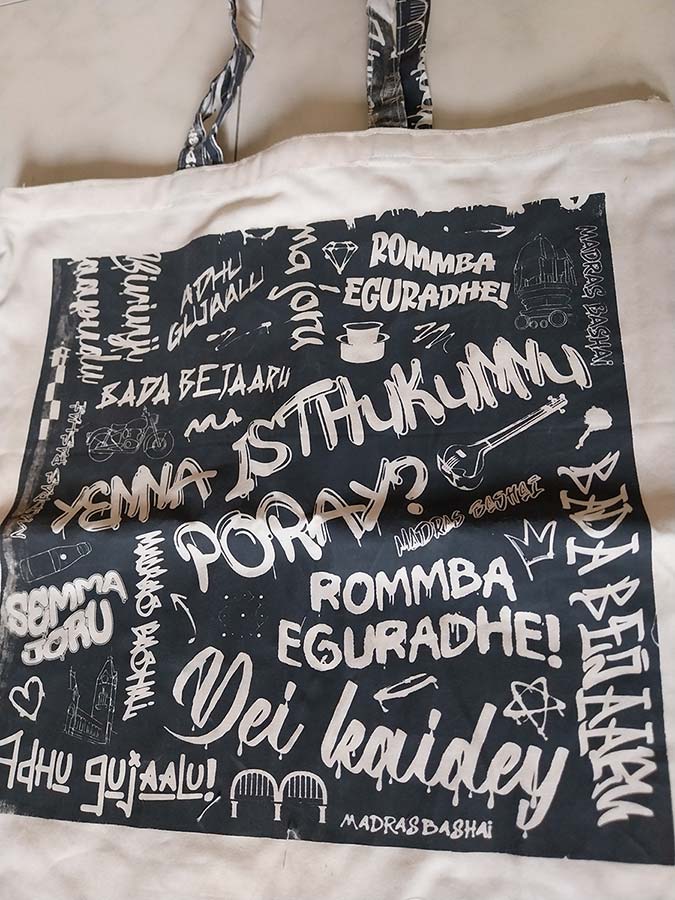
Indian Twist’s bestselling Madras Bashai bag
Shuba gives us an insight into her talent pool by describing the products and their creators. “There’s this young boy who loves to take a brush and splash paint on the canvas and watches as the paint drips. I loved it, so I took it, scanned it, and put it on a mug, and now my customers love it!” she smiles. She goes on to talk about another boy with Asperger’s, who loves to doodle. “So, we got him to do graffiti using ‘Madrasisms – Madras bhashai’ (lingo) (sourced from a historian). Our graphic designer supervised his work, and the result is stunning! It’s on a tote bag and has become one of our fastest-moving products. It looks so chic and fun. Another product was the papier-mache ‘Rowdy Rangan’ keyholder made by autistic youngsters. This had the face of a typical Tamil film rowdy, complete with a mole on his face and a very long, black, waxed moustache, where you can hang the keys. The whole process was set up like an assembly line, with each of them doing one part: shredding paper, mixing it in water, then shaping it, drying it, and then painting the face and moustache. They had a great time making it! And all two hundred of these sold out within days. It was only after our customers purchased the product that they realised it was made by these kids,” says Shuba. The purpose of Indian Twist, as Shuba points out, is to create fun, funky vibes and remove the sad and dreary ones, even if for a moment here and there. The joy of Indian Twist is as much for the creator as it is for the buyer.
Many of the Indian Twist products are tailored/ created at women’s rehabilitation shelters in Chennai. These skilled and unskilled women here are held to high standards because with Shuba, there’s no cutting corners or compromising on quality. A thread out of line or a double stitch here is a no-no with her. The women slowly learnt that no matter what the situation is, the work must go on to perfection, or it could be rejected. Tailoring and embroidery work are their forte, and the lovely work speaks for itself.
Sometimes, bringing a bit of comic relief into their mostly mundane lives is the kind of product that Indian Twist commissions them to do. An example being ‘jelebi’ and ‘murukku’ paper mâché coasters. Despite their own baggage, the women enjoyed themselves immensely as they twisted and twirled the murukkus into shape. Suffice to say, every last ‘bite’ sold out. There’s no element of charity or pity behind the product—that’s the most important aspect of Indian Twist. Buy for the fun in it, and only that.
On the artisanal front, Shuba reached out to the sculptors in Mamallapuram. She met them and figured out that they would have time between their bigger jobs, a lean period, if you will. “I got them to make miniature ‘ammikallu’ (stone and pestle) as fridge magnets and post-it note holders. It was such a hit, and the sculptors made a bit of money during their off-season!” she smiles. Similarly, block printing, which is less heard of these days after the popularity of offset and digital printing. Today, they are mostly used to make prints on sarees and dress materials. That set Shuba thinking. So where were these blocks made, and what of them now? She contacted block-making craftspeople in small towns and villages to make aesthetic, fun, yet useful items like spice boxes and small party favours to add to the block key chains, tealight holders, coasters, etc.
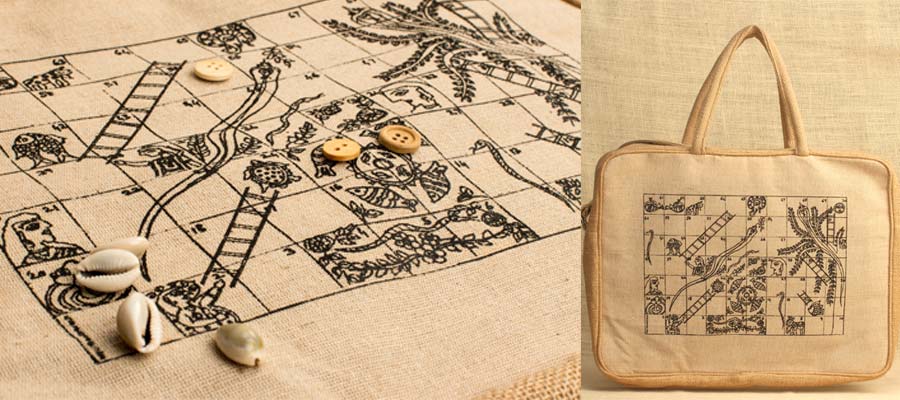 Laptop bag printed with a game of Snakes and Ladders
The products at Indian Twist are all 100% useful. But with a twist. They’re all quirky, fun, funky, and even crazy through their rendition and design. One of a kind, each one of them. Having begun the process of shifting the goalpost through their art and artisans, Indian Twist’s target is bulk purchases rather than retail outlets. Shuba feels that corporate gifting, new employee welcome kits, and festival gifts will be a good way for Indian Twist to be able to increase their margins and therefore pay their artisans more. She wants to make it a sustainable, steady source of income for these groups and a vibrantly Indian one.
Indian Twist is currently available only online, with occasional presence as a pop-up in exhibitions. Instead of bearing overheads, she says she’d rather plough the money back into paying her artisans better and buying quality materials. “For some of our products, like notebook covers, the artists were paid royalties for every piece sold, apart from the artists’ fee we paid at the beginning, because we sold them as a bulk order. Which is why I would like to cater to the corporate world. That is my vision; that their source of remuneration be steady and sustained.”
Shuba concludes, “Not all the products on our site are made by the neurodiverse, or by women who have risen above their mental health challenges. Some have been made by the neurotypical, too. But they contribute to the cause, where profits from these products go towards initiatives for the neurodiverse.”
For the creators, art is therapy; for the buyers, it is meaningful fun. To both, Shuba brings in the twist. Guaranteed you’ll leave the site with souvenirs and a smile.
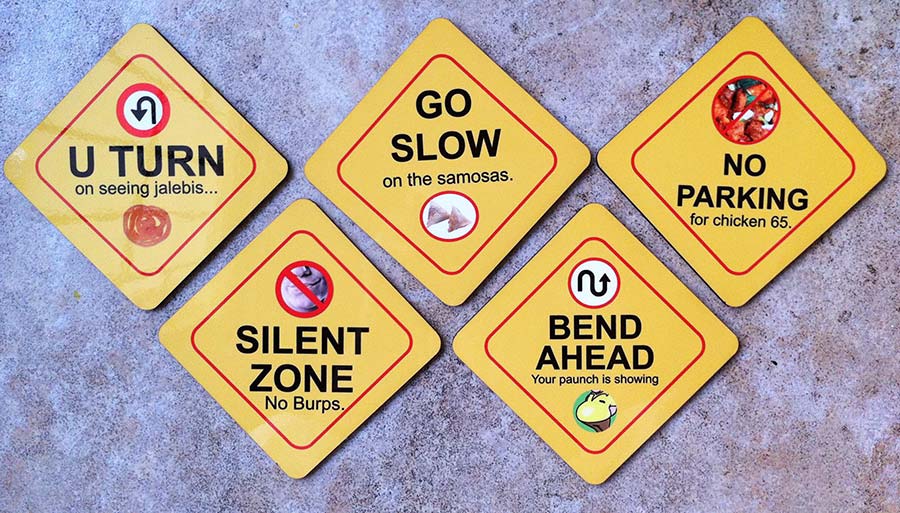 Dieter’s Coasters