Extreme hunger pangs hit you. You’d do anything for some good, wholesome food. Actually, forget wholesome, you’d kill for any food. That’s what ‘Kolapasi’ translates to in Tamil—that feeling where you’d do anything to feed your hunger. Santhosh Muruganantham came up with the idea for a chefless, quick-service, global restaurant chain in 2013, serving hot, freshly cooked meals in minutes.
What’s in a name?
“We wanted a name that was quirky, funny, vibrant, and memorable. ‘Kolapasi’ is a very widely used colloquial word, so any Tamilian across the world can instantly relate to the brand name. We used the purple cow philosophy for our name. When you see 20 cows and one of them is purple, wouldn’t you take a photograph of it and remember that for a long time? With our brand, too, we don’t spend much time and effort advertising the name. You’ll see a place called Kolapasi and wonder who on earth named it that,” he grins. “Another reason behind the name is wanting to take Tamil to more corners of the world. It’s our humble tribute to the state and the language.”
The chain of restaurants operates in India, the US, Australia, and is opening in Europe in the next few months. It is one of the fastest-growing South Indian restaurant chain brands in the world. It follows a QSR model—Quick Service Restaurant—and is the first of its kind in Indian cuisine. “Very few Indian restaurants have quick service models like McDonald’s, which we wanted to emulate with Indian meals. We’re also the only restaurant chain that follows an STO model, which is essentially See, Taste, Order. Nowhere else can you see the food and taste samples of everything before you place your order! We wanted to go with the mall model, where you try on your clothes before making a purchase. The level of satisfaction when you translate it into the restaurant sector is high, since you know exactly what you’re going to get,” he says.
Behind the scenes
Talking about the nitty-gritty of the restaurant chain, the recipe formulation, menu engineering, and R&D are handled by Santhosh. His mother helped him initially, but he took over after a while. As for maintaining consistency across the globe, he explains, “We are the only Indian restaurant chain that is chefless. We are fully process-oriented, so anyone can make any of our dishes. They need minimal training; all they have to do is follow the set process and ingredients. We have our set of proprietary masalas that go from Chennai, and after that, anyone across the world can fix a meal in 2-3 steps, just like a Domino’s or Burger King.”
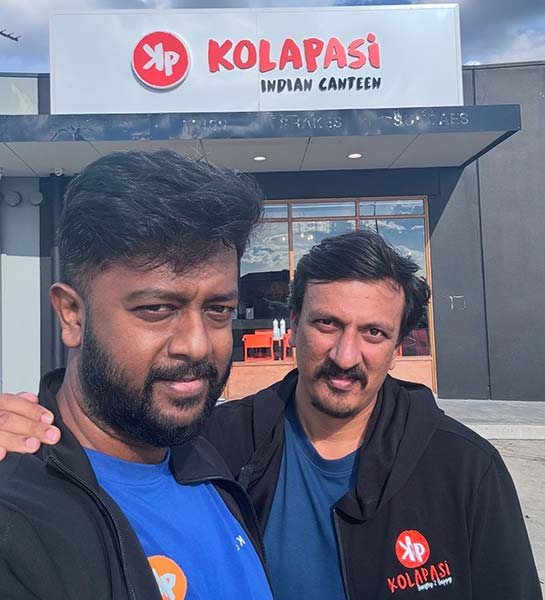
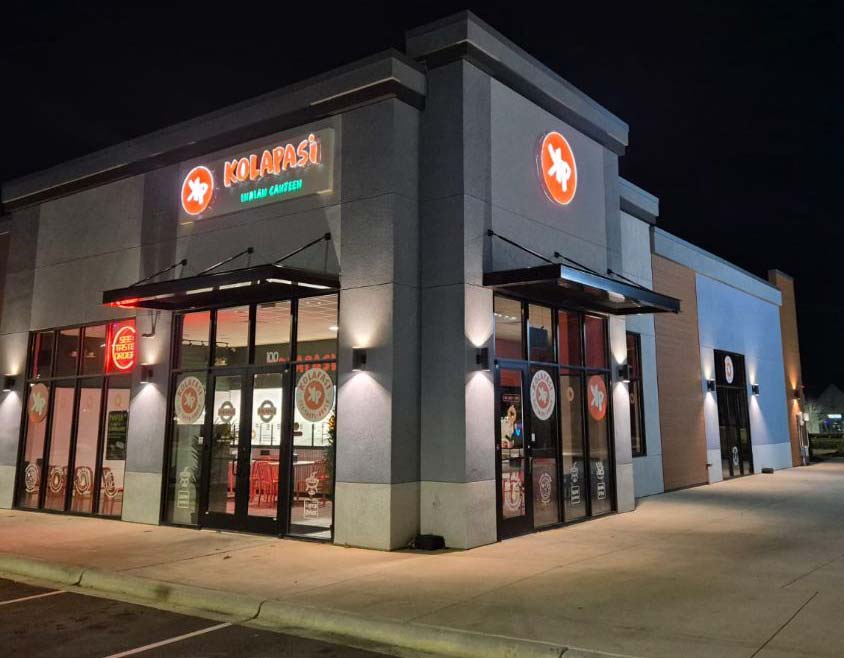 Kolapasi Indian Canteen, recently opened in Charlotte, North Carolina
A problem waiting to be solved
Inspiration, Santhosh says, struck when he realised the huge gap in the restaurant market where other cuisines were able to scale because they weren’t dependent on a chef; all they needed was a process. The burger, pizza, sandwich, and Mexican industries are able to scale, but that wasn’t the case for Indian food, despite being delicious and loved globally. “When I returned to India, I told my friends this is a fantastic problem for us to solve. If we can take one decade and scale Indian restaurants, the world is ours. We took it upon ourselves, being idealistic guys, and it actually worked out! Now we have 15+ branches. It wasn’t easy, but things rarely are,” he smiles.
None of them came from a business background. Finance, labour, resources, standard operating processes, systems, how to hire, how to fire—everything was brand new. He describes their journey, “We stayed through it all, and slowly we managed to make mistakes, learn, fix, and do it all over again the next day. Now, the challenge is more about how fast we can scale. Learning about each country and understanding its community, tastes, and workings is what we’re doing now, in order to scale even more. The interesting thing is, it’s easier for us to scale in the Western world than in India. In the West, people are more independent and don’t expect the personal service and attention that we do here. Those markets are more conducive at the moment.”
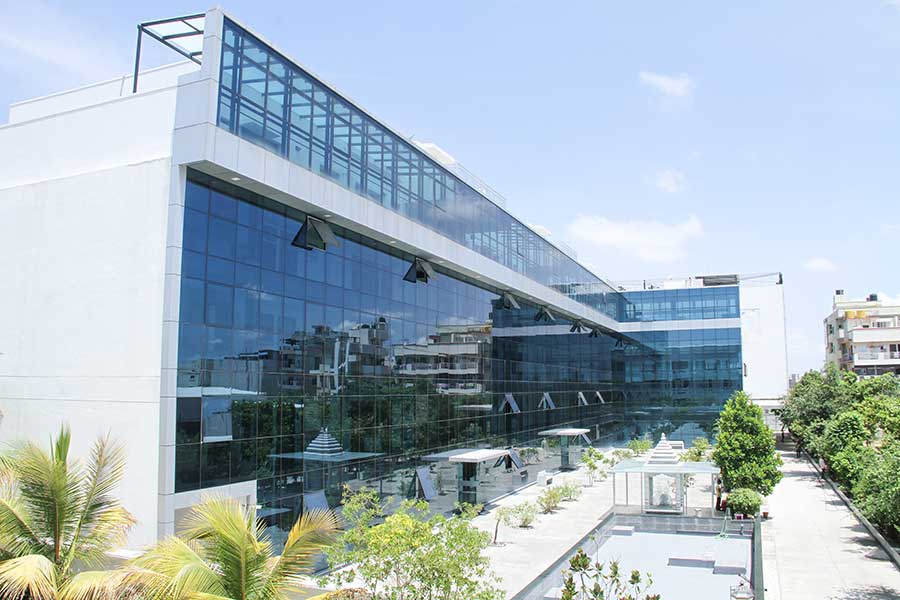
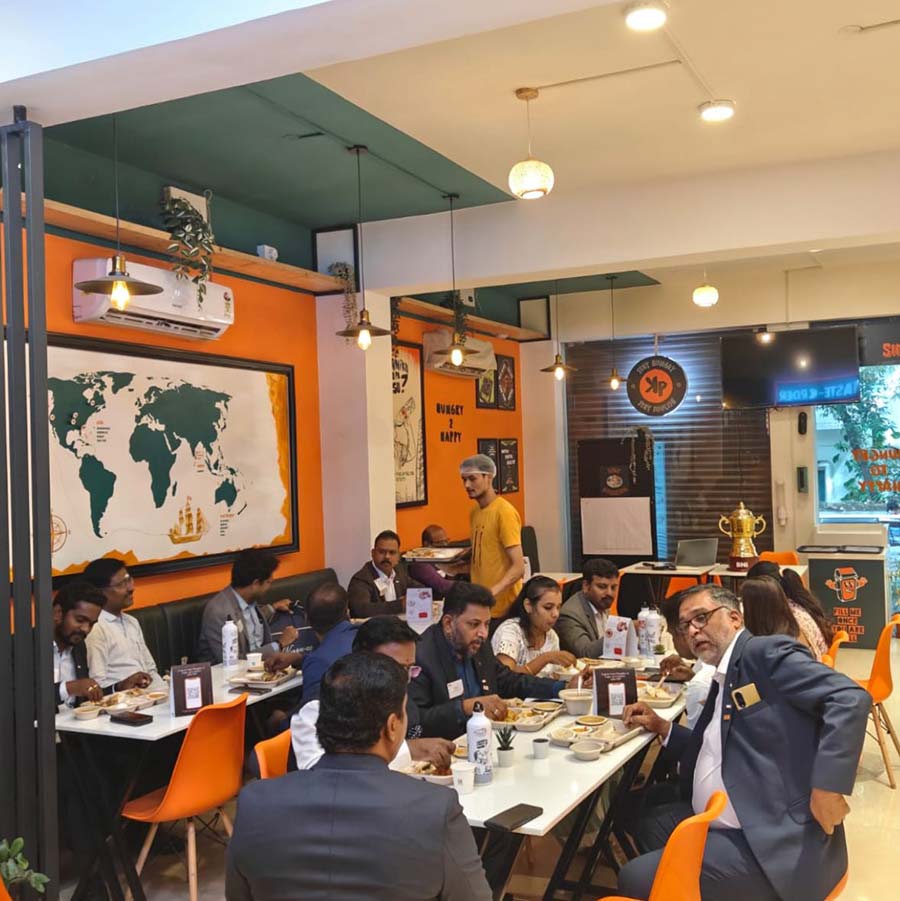 The Chennai branch of Kolapasi
The daily grind
On the topic of lessons learnt, Santhosh lists, “Number one, there is no limit for your brain, other than yourself. You have to assume that there is a solution to a problem and work backwards. The biggest advantage we had when we started was that we didn’t know how tough the restaurant industry was! I don’t think we would’ve even started this if we had the faintest idea how unrelenting the field is. We were naive enough to think this wasn’t a big deal and that we could do it. It became a blessing in disguise, because you don’t have to know everything to do something; you just have to know enough.”
Starting from scratch with a unique idea and the conviction that they have it in them to do something, the group of friends achieved what they set out to do. “We might be the only Indian restaurant chain that operates across four continents without sending a chef from India. We developed a model that works in multiple locations and cultures. I heard this somewhere, and it has stuck with me ever since: the harder you work, the luckier you get.”
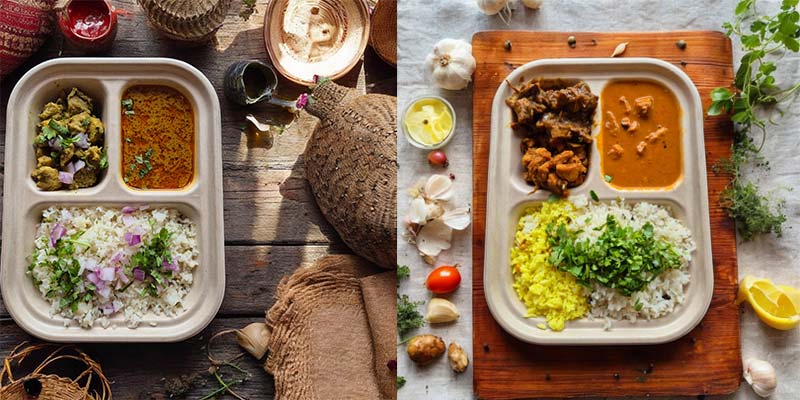 The restaurant chain serves up hot, fresh Indian meals in minutes, following a chefless, experiential, quick service model
A novel model
Santhosh describes what walking into a Kolapasi branch is like. “We take credit for creating a new model called EQS, which is an Experiential Quick Service restaurant. The industry is generally bipolar: you either have quick-service takeout models or you have the sit-down, dine-in model. At a dine-in place, you get the experience, and at a quick-service place, you get faster service. We took the best of both worlds and combined them at Kolapasi. You get food at lightning speed, but you also get the experience of tasting the food before you order. That’s the novelty we’ve built.”
The distinctive nature of the restaurant chain extends to the dishes as well, being the same across all the branches. Santhosh laughs, “I have to be obsessed with the dish for it to make it to the menu. I have to like it so much that I need to be eating it twice a day during the R&D phase! We release it as a trial item, get feedback from customers over a period of time, and then add it as a permanent addition to the menu. Our bestsellers are our sambar rice, biryani, chicken chukka, mutton peratal, pallipalem chicken, and rasam rice. We also created a keto curd rice, which is made with basil seeds instead of rice.”
Closing the conversation with his thoughts on what motivates him to work on Kolapasi every day, he says succinctly, “I woke up today, and that’s enough to propel me towards doing something. I’m alive, and that’s all that counts.”
For further details, check the Kolapasi website www.kolapasi.com