
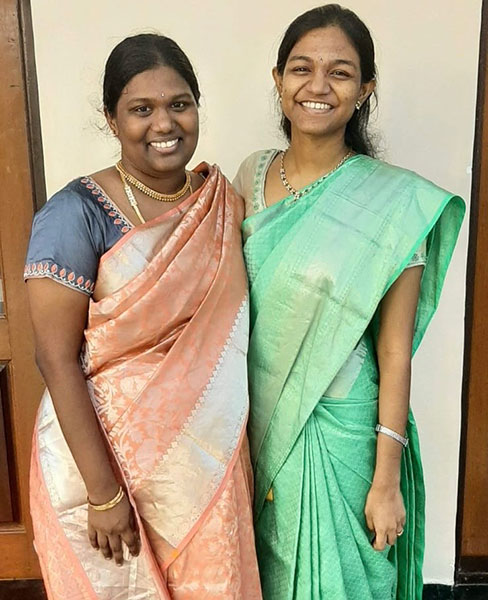
Two sisters, Kasturi, an auditor, and Lakshmi, a graphic designer, started Madras Design Story as a way to channel their passion for art into something tangible. What began as an ode to their Karaikudi roots evolved into a store that designs all things Tamil.
Kasturi Ramanathan, co-founder of Madras Design Story, spoke candidly with us in an interview about the brand, the art, and the story behind the name. “My sister and I started the brand as a way to bring out more Tamil-inspired art and design to the mainstream market. She does all the designing and artwork, I handle the business side of things, and our mom is the mediator between the creative brain and the mathematical brain, finding that balance for us,” she laughs.
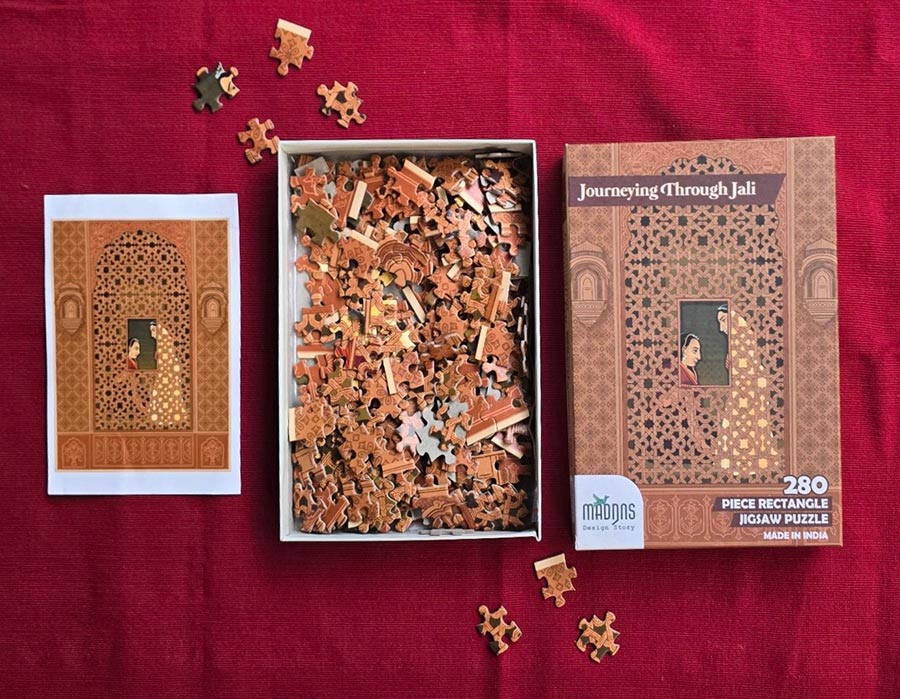
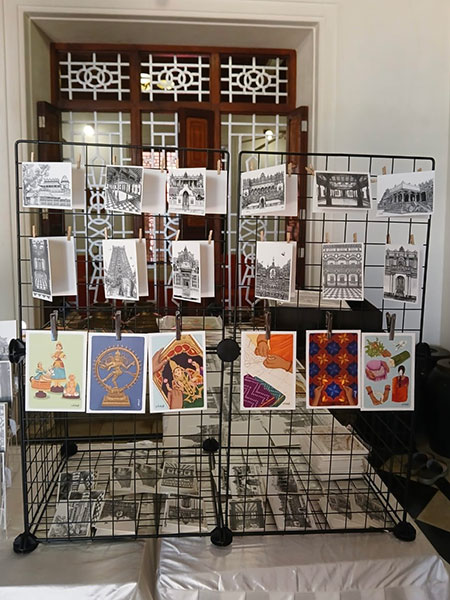
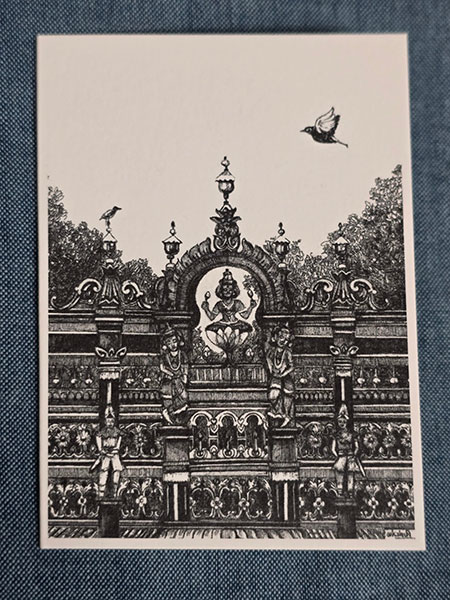
Her sister, Lakshmi, is a full-time artist and graphic designer, and Kasturi is an auditor working in the corporate space. The brand, which Kasturi calls their ‘side hustle’, was born out of sheer passion. Their dream is to bring more stories from Tamil Nadu to the forefront through various multidisciplinary mediums. Their bestselling products are their postcards and jigsaw puzzles, all inspired by Indian architecture and design elements.
“Lakshmi and I both enjoy puzzling, so it was a natural step for us to design some of our own. We realised that all the puzzles we did were from foreign lands—the Eiffel Tower or the Golden Gate Bridge—we wanted to introduce something innately Indian. We have five designs now: a Kerala boat racing scene and the Srirangam temple, which are our bestsellers. My sister hand-draws all the paintings in pen and ink on A3 sheets, which we then digitise for printing,” Kasturi explains. She tells us how one customer purchased all 18 architectural designs, framed them, and created a gallery wall in their house!
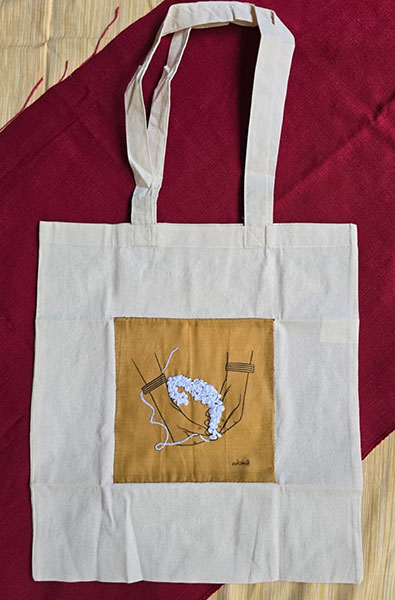
Apart from paper products, they also have tote bags with embroidery, which their mother and grandmother make. They have a white bag with a bullock cart design, which is completely done in ribbon embroidery and cross stitching. They also do MDF pieces, which are heat-treated to be water- and stain-resistant. All the manufacturing is done through vendors in Chennai, and the designing is in-house. The brand’s name conveys what they set out to do: bring traditional Madras and Tamil designs to more people.
Journeying through Jali Jigsaw Puzzle
“Until three years ago, we were doing this under my sister’s name, Lakshmi Olagammai. She felt, however, that people were contacting her for the merchandise, and the focus on her original A3 paintings was getting diluted. We then decided to split, and we established Madras Design Story as a standalone brand in 2023. She continued designing, and I joined in for vendor coordination, operations, and finances. We brainstorm ideas together, which Lakshmi then translates into tangible works of art. This way, she can have her artist’s name separately, and our brand can be an extension of that,” Kasturi says.
The sisters have worked on children’s books as well, with Kasturi writing the story for Lakshmi’s illustrations, and also some coffee table books. One project was for the Velamal group, a thought-provoking hardbound journal for school kids aged 10-14. It was a way for the kids to answer prompts and put their feelings down about puberty, physical, and emotional changes. While they did get enquiries for books, they got much more traction for their giftable items, so they shifted their focus towards that. More work led to more challenges.
“In the three years since we started the brand, we have grown so much, as a family, and as an art-led company as well. I had my daughter two and a half years ago, and my sister recently got married. We are lucky enough to have the most supportive family, whether it be our parents, husbands, or our in-laws. All of them pitch in to help us whenever they can, being at our pop-ups, taking care of my daughter, and helping us pack orders. Our biggest challenge is being able to balance our day jobs, family, and the brand. We don’t want it to be a side-hustle forever. We want to dedicate as much time and importance to it as possible,” Kasturi explains passionately.
With validation and growth, the brand wants to take some big steps to move forward. “Until last year, we didn’t take our social media platforms and growth seriously enough. We didn’t have a website, we only posted sporadically on Instagram, and all our marketing came from word-of-mouth. This year, we made a vision board for ourselves. The main thing on that is to double the number of pop-ups, because that’s where we meet the most people and get the most feedback. We also want to get our website up and running; taking orders via Instagram is a hassle. We also want to expand our network and have our products in more spaces. We recently got an enquiry from Singapore,” she smiles proudly.
If given the chance to start over, Kasturi says, they would have started earlier, but of course, hindsight is 20-20. “We have a lovely community rallying around us, amazing vendors, and so much support. If we had started when we were younger, we could have done Madras Design Story full-time and done our day jobs on the side. Nothing against our jobs, but I wish it were the other way around!” she laughs.
She adds that they would have spent time figuring out the customers’ tastes earlier. They started with greeting cards, but they took a long time to move. When they made a few iterations with the paper and the envelopes, they flew off the shelves. She also mentions how hard it is to let go of products that don’t sell as much as they did in the beginning. A lot of money and time were invested, but they’ve been able to refine themselves and build a memorable, unique brand.
Kasturi describes their creative process. “Our approach to what products we design is very straightforward. We want to make things that we can use in our daily lives, or create a piece of art that can communicate a story. Essentially, we want our merchandise to be accessible and have some utilitarian value. Our postcards, for example, cost only 33/-, but they can act as a conversation starter or strengthen the bond between people when they send them to each other with a little note. With our jigsaw puzzles, magnets, and bookmarks, too, they act as keepsakes.”
When they come across a product that is imported, or has an international design on it, they begin ideating ways to Indianise it. They make the most of each family member’s interests and skills—their mother’s crochet, Kasturi’s writing, their grandmother’s embroidery. The overarching theme of capturing Madras’s essence, however, never fades. The sisters go back to their childhoods for inspiration, too, in terms of designs and product ideas. Quirky magnets, warm greeting cards, and such. Their next goal is to create a series of children’s books for kids in their formative years.
On the topic of what made them realise this was working, Kasturi explains, “Every pop-up we do gives us a massive sense of validation. To see people appreciate your art, even if they don’t buy it, is an incomparable feeling. We have a long laundry list of ideas hanging up in our childhood bedroom! We now use the room as our office space; it’s a nice way for us to spend time together with our mom as well. Eventually, we want to try printing Lakshmi’s designs on cloth and getting pouches or bags stitched, or fun Indian designs on gift wrapping paper.”
As kids, Kasturi mentions, both of them loved making things with their hands and preferred that over watching TV or anything else. That childhood love for creativity has translated into a multi-media, culturally-rooted brand today. She concludes, “If you have the right set of people around you, you can dream of literally anything. Even with day jobs, it’s very much possible to have a lucrative side-hustle, doing something you’re passionate about and making yourself proud. Your individuality can shine, and your imagination can soar; you can be authentically yourself.”
For further details, check the Madras Design Story instagram www.instagram.com/madras.design.story