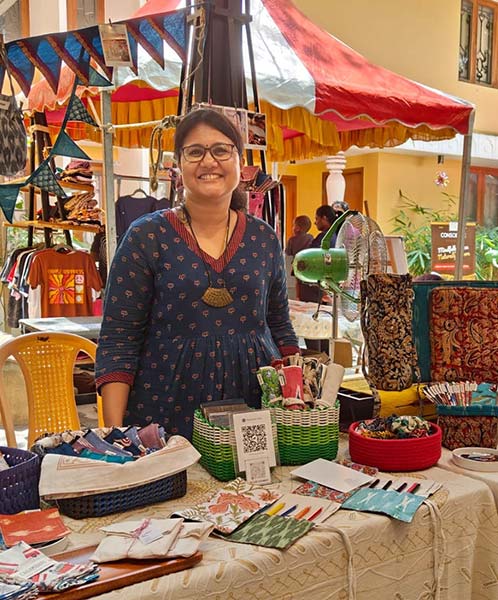
Rajeswari Ravi, the founder of Studio Cadambari, is an architect, turned academician, turned entrepreneur. She launched the brand on 8th March, 2024, to commemorate Women’s Day. She, along with her team, recycles scrap fabrics and transforms them into products for everyday use.
Rajeswari was an architectural educator for over 15 years, till she took a break in the last 2-3 years. “During my break, I decided to do something for myself, something good for the environment, and something that would ideally help women with an interest to learn new skills. I wanted to put my design background to use and give a second lease of life to textiles that people discard, tailoring waste, or surplus fabrics. When I took this break, I wanted to ground and find myself, so I thought back to what I enjoyed doing as a child, and my mind immediately went to stitching clothes for my dolls and doing a lot of arts and crafts. It was nostalgic and the perfect solution. Around the same time, someone asked if I could train some women to make products for sale, and that’s how Studio Cadambari began. I realised how important the job was to these women, who don’t have the bandwidth to work regular jobs due to their household responsibilities. I understood then that our work had the potential to fill a lot of gaps,” she explains.
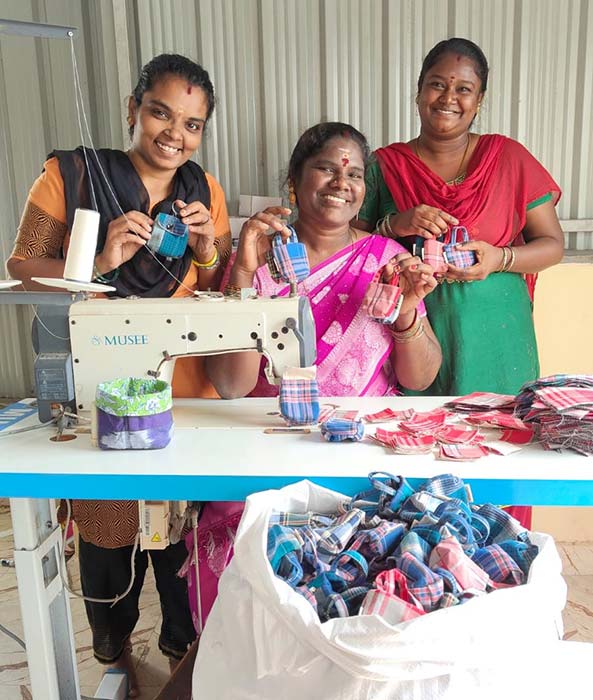
The brand is now known for making sustainable, mindfully crafted, eco-friendly gifts in unique designs. The women who are employed here started by carefully making the bags using patterns, and now they make their own patterns and are able to stitch many other products. All of them have earned their tailoring certifications and the confidence that they can do this for a living. The brand focuses on recycling textiles so they don’t end up in landfills.
When asked about where they get their fabrics from, Rajeswari laughs, “Anyone’s fabric stash, really, if they want to share! We also get tailoring waste material from boutiques and know small fashion brands that have donated to us. Export surplus materials are also useful to us, since they’re on sale for some minuscule defect. People give us their barely used clothes if they feel that there is still life to them when they’re clearing out their wardrobes. I started with my circle of friends and family, but the community is slowly growing along with the brand.”
She admits that it was hard starting solo with no formal training in tailoring, but building her team of hard-working, dedicated women made all the difference. The women work when they can, but never shy away from putting in the extra time and effort for an timebound project or bulk order. She talks about how there are immensely talented people out there who, given a chance, can take up handicrafts and have a dignified, flexible job. Especially for women who can’t go too far from their homes or have a very limited amount of time to dedicate towards work. It’s not often that people get to pursue a creative field, so when they do, it’s necessary to understand that there’s a lot of heart and soul in every product. It’s an extremely nourishing and satisfying job, she says. People just have to see it.
“You don’t have to make something yourself; you can just get what someone else made. If you simply choose a handmade product instead of a mass-produced item, that itself is a huge leap in the right direction. It might not seem like it, but it makes a world of difference. I hope I can be someone who spreads awareness for upcycled products, and eventually onboard and empower more women,” she says. “It’s a challenge to grow a brand like ours when people make assumptions about the making of the products.”
There’s a preconceived notion that donated fabric is free, and therefore, the product should be cheap. Rajeswari begs to differ, “We segregate the fabric according to thickness and texture, quality check every inch, and only then can we even plan what to use it for. There is a lot of labour involved, which sometimes turns out to be more expensive than just buying the fabric off the shelf. The hardware, the zippers, the labels—all of these are added costs that no one sees. People are unfortunately sceptical when it comes to handmade items, but don’t bat an eye for luxury, high-end products, even though we have so many options to choose from.”
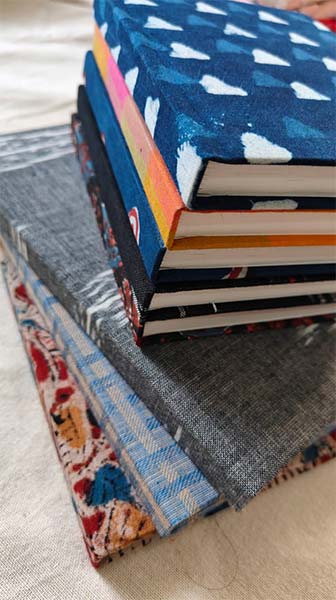
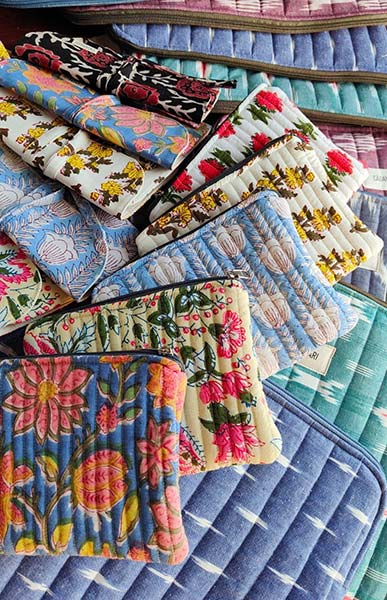
At the moment, Studio Cadambari’s product range includes coasters, pouches, totes, fabric covered notebooks, greeting cards, and bookmarks, among others. Rajeswari tries to include products that aren’t easily available in the market, or even if they are, they might not be available in fabric. She describes her thought process, “Am I able to offer something that isn’t already there in the market? That way, I have room to expand much more. Now, we work on different projects like laptop sleeves, bag charms, and keychains. Mostly, we stick to lifestyle products; things that make your life better. They also make a statement because they’re all upgraded with fabrics!”
The team is working on cementing their design expression and making their presence known before diving into more design-intensive projects. Understanding the pulse of the market and how much people lean into their products are two of their main concerns before expansion. The process itself is intuitive, Rajeswari notes, where she places the fabrics in front of her, and lets them speak. That’s how she decides that fabric to use for what products. At the moment, she is coming up with designs that are easy to replicate in a large quantity to retain quality and appearance. Her succinct statement on the handcraft industry and standing out speaks volumes.
“I am all for mindful consumerism—I don’t support it when people buy things just for the sake of it, without paying much attention to it. For people who appreciate handwork and the efforts that go into making a product, there’s place for any and every brand to shine. I think the ratio of consumers to people making handmade things is far too less! Everyone has their artistic expression, so I truly believe they will be welcomed with open arms if they just give it a chance,” Rajeswari smiles.
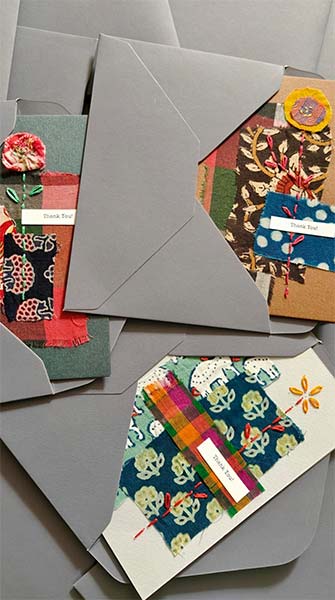
She describes one of their biggest orders—1,000 foldable tote bags as wedding favours. They had 10 days to source materials, finalise a design, stitch the bags, and package them all. “It was a complex project, but the team worked tirelessly to make it happen. We always include a little card with the brand’s principles and who is behind making the product. We feel like the person who commissioned the products might know and admire the item, but may not have the time to relay it to whoever they’re giving the gift to, so this is an extra effort on our part to add something special to the order.”
She concludes by explaining some of the things that make Studio Cadambari unique. “We are a very happy workspace, because the women can bring their kids here in case of holidays or weekends when they can’t be left alone at home. It’s heartwarming to see everyone take care of each other; it’s not just up to the mother to do it. Since I started the brand, there has been no looking back. Personal satisfaction for me, I realised, is seeing how meaningful this job is as a livelihood for these women. Paired with the love and trust that people give us, it’s all I need to keep going.”