
Following three years of groundwork, research, and a lot of trial and error, Tuhil launched as a brand committed to preserving Tamil heritage through fabric, which is what ‘tuhil’ translates to in Tamil.
From 2019, Varsha and Jayakumar worked tirelessly to build Tuhil until its launch in 2022. Working at the grassroots level with artisans and weavers and understanding the ecosystem took the most time, along with a detailed study of fabrics and design. In 2025, they launched their store on MG Road, Chennai. When asked about the origin of Tuhil and what inspired them, Varsha narrates their story. While shopping for their wedding, she was looking for traditional, authentic sarees like the ones she had inherited from her great-grandmother. When she asked shops for handwoven sarees with pure zari embroidery, the instant reaction she got was—but those are so old-fashioned! Even though that’s exactly what she wanted.
Varsha is a management consultant for performing arts. Her husband, Jayakumar, is a classical musician and a researcher of South Indian culture and history. They run a startup focused on cultural travel and also have a trust for the preservation of tangible and intangible heritage. Pairing his vast knowledge with her passion for bringing tradition to the forefront, Tuhil was born. “We went to Kanchipuram to see the weaving units, hoping to find a saree for me. We realised how many gaps there were, not just in terms of authentic craft and material, but also in how the system operates. Our solution to combat the depletion of historical tradition in the last few decades was design intervention by eliminating the middlemen. We wanted to work directly with the artisans, which wasn’t easy,” Varsha explains.
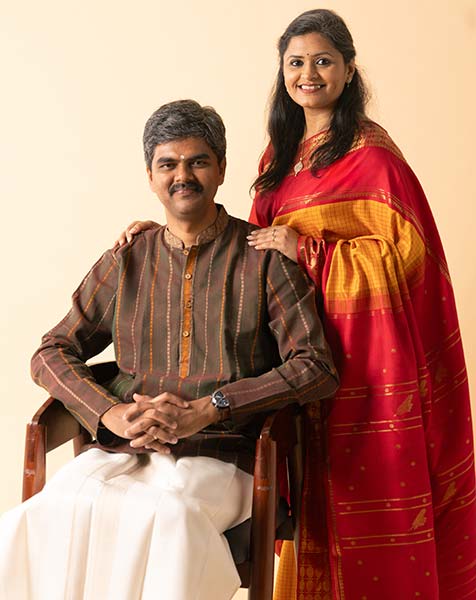
They had to convince the artisans that they were not resellers or traders. They would work for them exclusively, and every single piece they made would be taken. No risk. Generally, when brands work with weavers, they only take the pieces they want, but here, that would not be the case. “We started with Koorainadu, which is a weave native to Tamil Nadu, historically worn by Tamil brides. It’s a simple weave in appearance, with micro checks, but the making of it is extremely challenging. We are fortunate enough to be working with some of the last few artisans engaged in this process. The family that spearheads this for us is led by Rukmani Amma, who is 73 now. Her nephews, after years of convincing and training, have joined her. We’re using nostalgic revival through recreation as a means to be able to create,” Varsha states.
For the silks, they archive pieces, take photographs and measurements, before attempting a faithful recreation of the motifs. She describes how taking a closer look at colours, motifs, and their historical background allows people to look at tradition and culture in a whole new light. “Take the classic checks, for example. You might notice the general design, but not the fact that it’s made up of squares, without which most traditional textiles wouldn’t exist. In geometry and Vastu Shastra, it is the most auspicious shape. It’s used in pujas with a square border containing the fire, and it’s used in temple architecture. Our primary aim at Tuhil is to translate the knowledge we possess into something tangible,” she smiles.
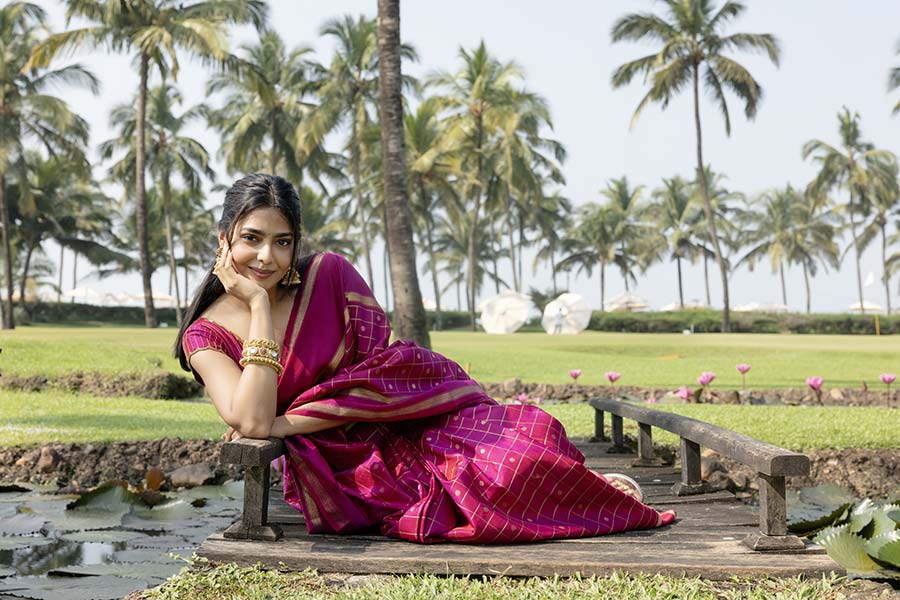
Actress Aishwarya Lekshmi in a Tuhil saree
Varsha explains how intricate the process is and how they strive to create awareness. Setting up the loom takes 3-4 weeks. If the artisans are unhappy with the weave, they undo the loom, which takes another few weeks. On the whole, one saree can take up to 6 months to weave. “The measurements and the structure are all part of a codified grammar. The way the motifs show up is also a science. It depends on how the warp and weft interact and the loom setup itself. If you don’t do the math correctly beforehand, there’s a high chance of the expansion and contraction of the yarn coming out wrong. Unfortunately, the market is saturated with polyester blends and power looms, and most people don’t know the value of a true handloom piece. Material cost aside, it is such a labour-intensive process involving months of hard work. We’re doing our best to get more people to engage with our work and to understand that there is so much more to textiles than meets the eye. We have also realised that people relate to our pieces because of memories they have of their grandmothers or mothers. Memory is something we hold on to dearly, and seeing it translated into a saree and being recognised and loved is beautiful.”
Currently, Tuhil works with four materials: Kanchipuram pattu, Koorainaidu silk cotton, silk cotton with Kanchipuram designs and motifs, and the finest Negamam cotton from Pollachi. They handpick the yarn, the colours, and the designs. The yarn is procured locally at each weaving cluster or unit that they have. Their silk yarn comes from Bangalore, pure cotton from Negamam, the cotton for their silk cotton blend is from Chirala in Andhra Pradesh, and for Koorainadu, it’s from Salem. The pure zari comes from Surat. Only natural fibres are used to make it as authentic as possible, and every saree has its unique appearance, because everything is human-made. Luckily, people see the significance.
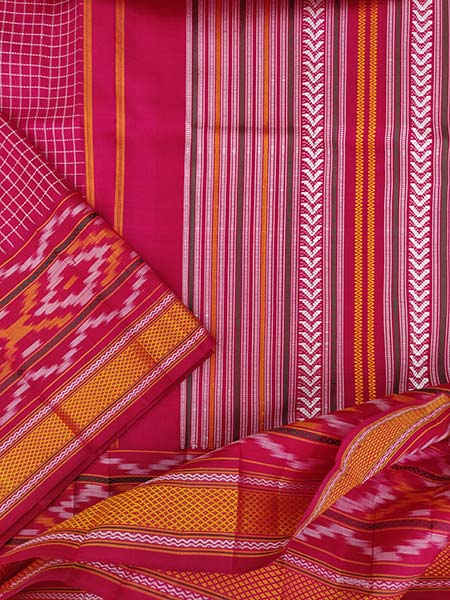
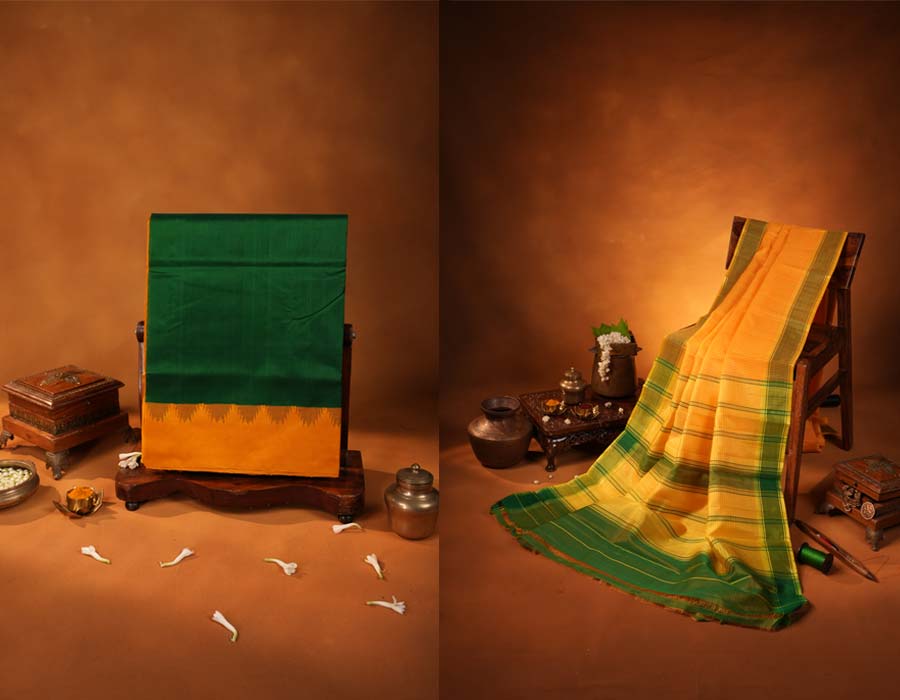 Silk cotton Kanchipuram saree, Kooranaidu saree
Varsha mentions how, today, a lot of young people want to learn about their roots, heritage, and culture. “This wasn’t the case a few years ago, but it has really picked up now. They are curious to learn their truth and to experience what their mothers and grandmothers had. Emotion has become a natural entry point for textiles, and Tuhil is here to cater to that. We want to put South India on the global map, and we want to do it with minimal wastage. Since every saree is made by hand, there could be some errors. We experiment with such pieces and upscale them into table runners, cushion covers, clutches, and potli bags. We’ve also tried men’s kurtas and veshtis. This way, we cater to a wider audience, and we don’t have to invest large amounts into it without testing the waters.”
Before starting the research for Tuhil, they conducted a survey where they found out that in 11 years (from 2019), there would be no skilled artisans left. They jumped at the opportunity because the last few people left were above 70 years old, and they had to train the next generations to continue their craft. Being part of a mostly oral tradition-led culture, it becomes a challenge to document and preserve what is there today, or it won’t be there tomorrow.
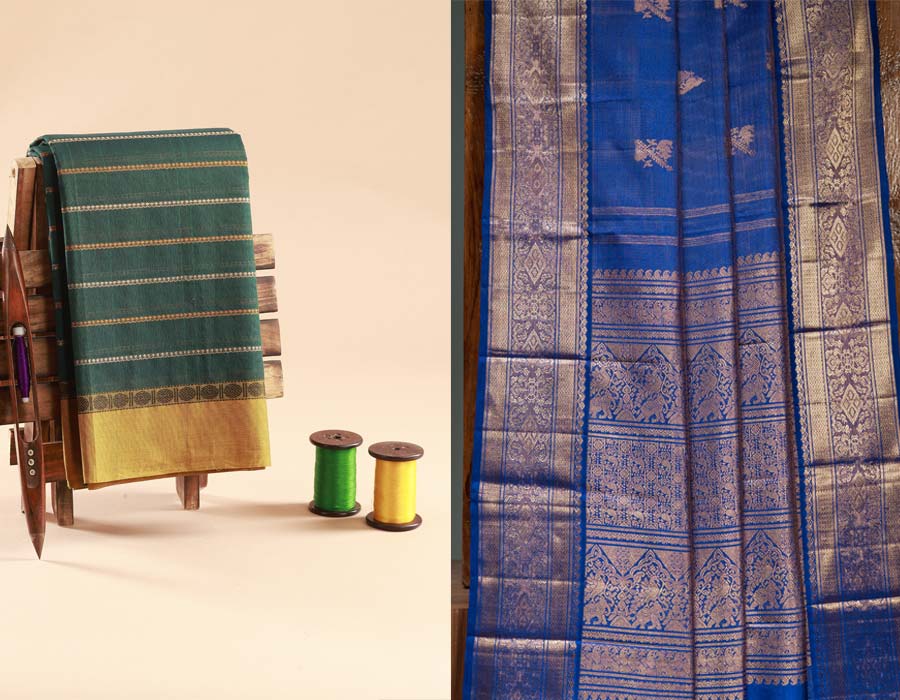 Tuhil’s pure cotton sarees use the finest Negamam cotton from Pollachi, Kanchipuram silk saree
On the topic of motivation and what pushes Varsha and Jayakumar to run Tuhil, she says, “People have told us how our sarees remind them of someone. How their aunt had the same saree but in a different colour, and if we can customise it for them. The kind of appreciation and love we’ve gotten is incredible. Sometimes, it feels surreal, the things we get to do. We made a commissioned saree called Meenakshi for the Asian Art Museum in San Francisco. They wanted a unique piece, and for us, the best way to translate Tamil Nadu was a Madurai-themed Kanchipuram saree. Both cities were designed in the form of a lotus, so we leaned heavily into that motif. It was an honour to be able to make that piece. Our passion and love for Tamil culture, tradition, and history make it almost impossible to do anything else. We spend every waking moment talking about culture, so it just makes sense for us to be doing this, and we want to for as long as possible.”