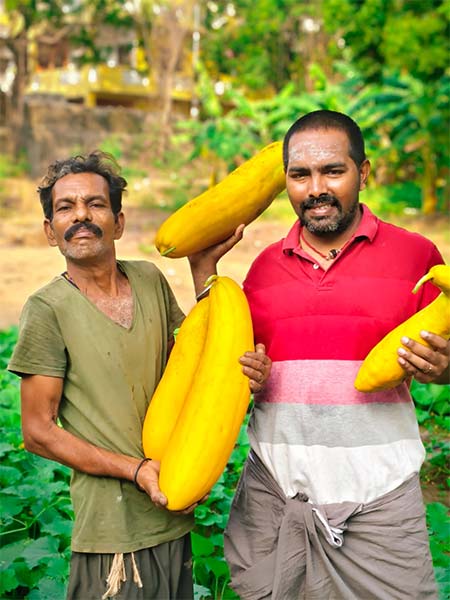
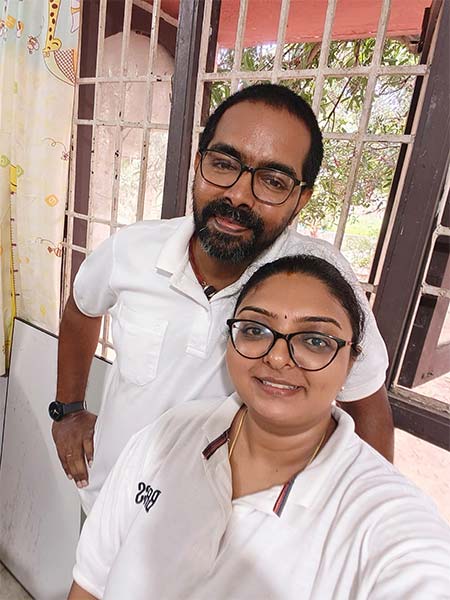
Gokulnath Natesan and his wife, Vinodhini, initially started Kazhani Farms for themselves. The idea came out of a personal need for good food, quality time, and a better lifestyle overall.
Both Gokul and his wife were born and raised in villages embedded deep in the Tamil Nadu landscape. Gokul moved to Chennai when he started working after college, and his wife moved there after they got married. Vinodhini found going to an office, meeting daily targets, and being a cog in the machine meaningless. They had to scramble to even eat a meal together with their busy schedules. What were they running towards? Was this the meaning of life—solving other people’s problems and working all the time? Yes, they had salaries, but they weren’t happy or satisfied with how they were living.
“When Vinodhini brought it up, we realised that our childhoods spent in our villages were the happiest days of our lives. Our parents were concerned when we told them about leaving our jobs; they had worked hard to educate us and send us to the city. They vehemently told us not to come back to the village. They told us to do whatever we wanted, but in the city itself. Their daily struggles as farmers in small villages were the biggest reason, which is a valid feeling. It really is hard. Because of that, we thought we would take up weekend farming on some land out of passion and wanting to spend time together,” Gokul explains.
They expressed their vision to the community association, one of the members being a close friend of Gokul’s. He told Gokul he had unused land and would love it if he wanted to take over. This was in 2017, and the rest is history. They cleared the forested area and set up their first farm. In Chennai, they had to start from scratch with the basic knowledge that they received from their parents back home.
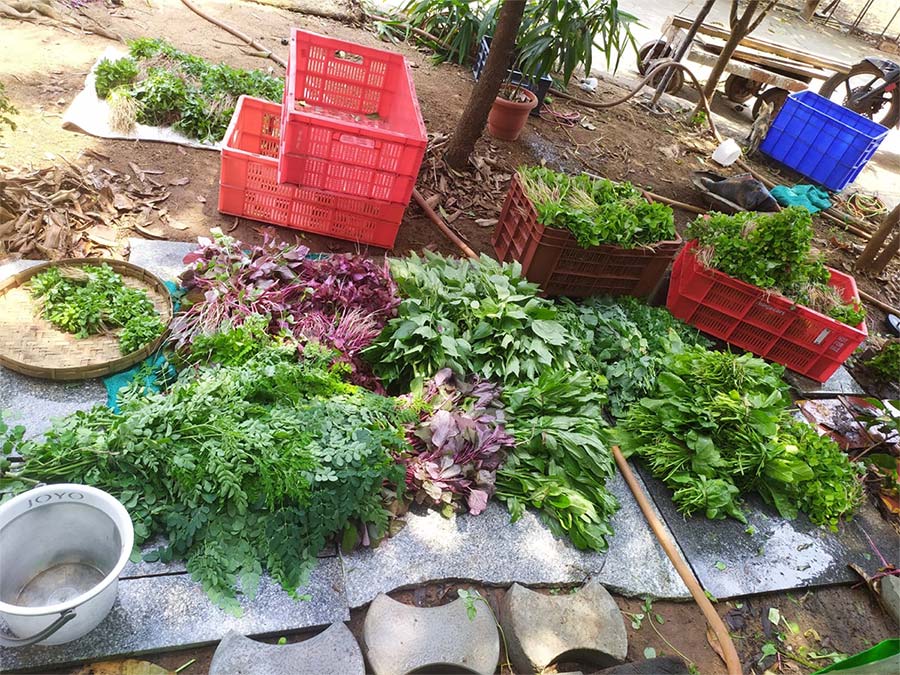
“We started by sowing native seeds that my mother used to plant for our daily use—red lady’s finger and brinjal with white stripes. These were relatively new to the city’s markets, which are full of hybrid varieties. People around the farm area developed an interest in what we were growing. They assumed we were importing our produce, but no, it was all native, indigenous crops with a unique flavour. We consumed some of the produce and distributed the excess among our neighbours. They would eagerly wait for us to be back home on Monday after our weekend at the farm to see what we had in our baskets!” Gokul exclaims.
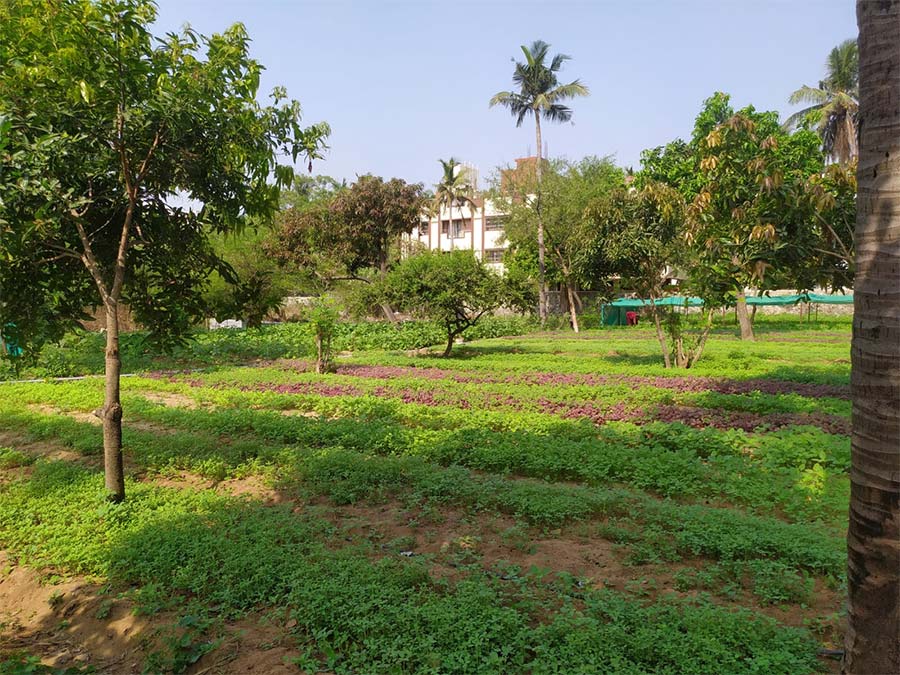
Adults and kids alike had taken a liking to the fresh fruits and vegetables that Gokul and Vinodhini were growing. By 2019, the couple decided to get into farming full-time and quit their jobs. They hunted for more land to expand their farms. They found an area near the beach that had been a farm but was now abandoned. They took one look and fell in love with the place. Kazhani Farms had found its space. It was a dense forest and a dilapidated bungalow that had seen no human activity for over 20 years, so they had their work cut out.
“Even though there was so much to be done, it wasn’t a scary situation. The diversity of the plants and trees there was unbelievable—over 1500 species all in one place! Wild food, creepers; there was everything. If nature had created all this with no human intervention, we had the confidence that we could create something good too. We began during the first wave of COVID, which was a setback for two people who had just quit their jobs and spent all their savings on creating a new life for themselves. But we took it in our stride; we spent our days learning and understanding our surroundings and how so much greenery cropped up with zero irrigation. We tried replicating our weekend farming crops, but the soil here was entirely different and sandy. The first two cycles were good, the third was okay, and the fourth, we had nothing. It was a huge learning curve for us, but I would say we were given the gift of time,” Gokul smiles.
Over countless trials and errors, they found that sunlight was being harvested in layers. Every layer of soil was getting a different yield of sunlight. They began experimenting and planting food crops that would be useful for them at first, like bananas, papayas, and moringa. Now, they grow sugarcane, tapioca, yam, gourds, amla, mangoes, coconuts, 7 varieties of bananas, 15 varieties of spinach, native varieties of brinjal and lady’s finger, long beans, and so much more. The couple has managed to create a microclimate and ecosystem at Kazhani Farms.
Earlier, they used to collect 20 tonnes of manure from other livestock farmers, but now, it has come down to 12 tonnes; the soil gets more fertile by the day. The farm property also has e-waste and dry waste management plants, as part of a tie-up with Wasted 360. What started as a family-run weekend farming project has turned into a sustainable community with like-minded people who make conscious changes to their lifestyles. The farm works with independent farmers and farmer collectives, supporting about 580 farmers at the moment. Schools send their students for tours of the farm, where they spend an entire day understanding the workings of Kazhani. Colleges like Loyola send their M.SW interns for three months and can connect directly with farmers to get a deeper knowledge of the process and their livelihoods. IIT has asked Kazhani to supply their products for their food stall on campus.
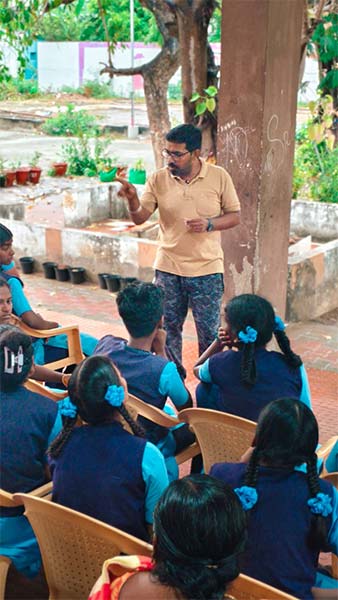
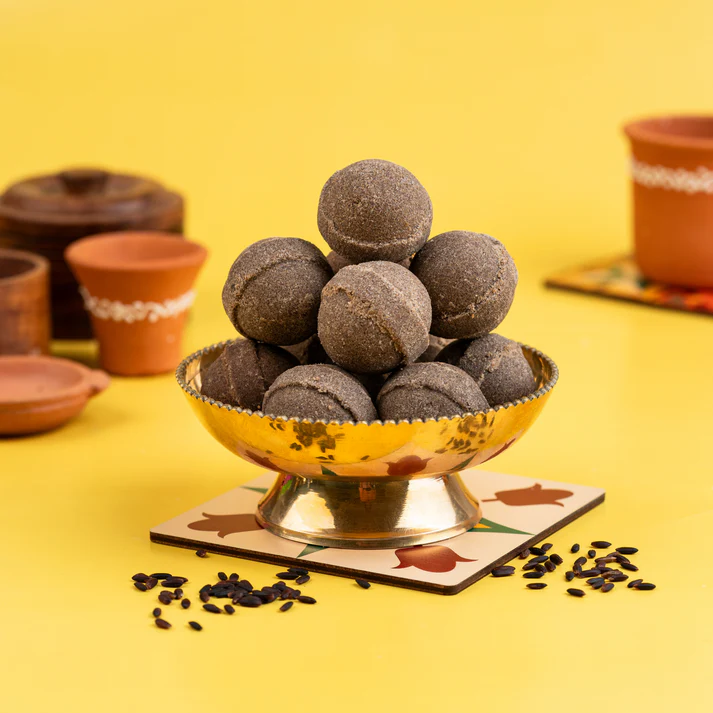
The farm also creates innovative, value-added products like pancake mixes, muesli, poha, and other ready-to-eat mixes with whole grains and ingredients harvested on the farm. Gokul teamed up with a milling unit, where the proprietor mills whole grains. The Kazhani team gives him the formulation for their products, and he manufactures them. As for the powders, the farm has a solar dryer where all the ingredients are dehydrated. Podis, pickles, and sweets are all made in-house, with the help of the 12 employees on site. Gokul spends most of his time on the farm with four others, training new people personally whenever necessary, addressing customers and queries, and collaborating with schools and colleges. Vinodhini takes care of all the in-house aspects.
‘Kazhani’ translates to a paddy field in Tamil, hence the name; an ode to the couple’s humble backgrounds. In the initial days, there were doubts. Would they be able to do this and sustain themselves without a steady income? Were they happy? Gokul recollects on their journey. “I told my wife this was the best decision for us. We made a conscious choice to be better and do better. Coming from families of farmers, we knew the challenges going in, but we also knew how satisfying it would be. Through it all, I had the conviction that we were together, so we could face anything,” he smiles.