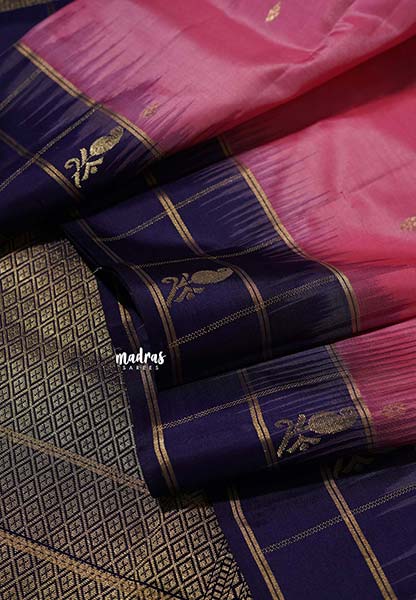

If you want affordable, beautiful, direct-from-weavers sarees in thousands of designs and colours for your everyday fashion, look no further. Madras Sarees has you covered.
Ramya Devanathan, an IT professional who worked for 18 years at TCS, had a spark of an idea during COVID—everything is online; why can’t sarees go digital as well? “From my teenage years, I loved the idea of a saree; I loved wearing them at any given opportunity. My aunt lived in Kanchipuram, so I grew up visiting weavers’ units and watching how sarees were made. Maybe that’s when my passion for the garment started,” she smiles.
In 2020, everyone was working from home, and the world was going more digital by the day, so Ramya thought, why not take the humble saree and turn it into a digital empire? She aimed to create a tech-led traditional business. Her sister-in-law was a skilled photographer and experienced in digital marketing, so she teamed up with her and started Madras Sarees in 2021.
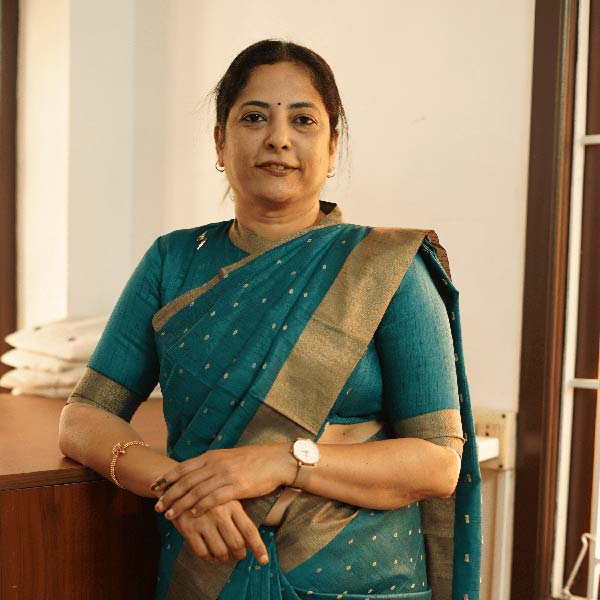
The brand looked very different from what it is today. The journey was hard, but it taught her valuable lessons, Ramya explains. “Since I was a first-time entrepreneur, I wanted to take safe, baby steps. We used free tools like Instagram, YouTube, Facebook, and Twitter to market ourselves. We’d market ourselves on these apps and take orders only via WhatsApp. I didn’t want to invest in a website just yet; where would we get customers from? We would do a livestream on YouTube showing the sarees we had, and at least 100 people would watch each time. We’d get messages directly on WhatsApp as these streams happened. We had to manually reply to each person, confirming their orders and payment. Some people cheated us by sending fake screenshots of transactions, but we still processed their orders due to the high volume of messages. That was a big problem for us in the initial days.”
Today, their website processes 400 orders a day, and she has a team of 15! She mentions that most of the women she employs are underprivileged, and is immensely grateful that she helps them in her own way.
She talks about the new generation of saree wearers and how they catch their attention. “You can’t go to young people today and tell them, “This is a saree”. You have to tell them a story; show them the emotion behind it; that’s how you sell to them. We show how we created the sarees, why we do what we do, and also give ideas as to who these sarees may be most suited to. For example, we market a certain section of lightweight sarees that require minimal care to doctors or teachers, as they are always on the go and prefer easy-to-maintain pieces. When it comes to Gen Z, they take a saree and convert it into many different variations—maxi dresses, skirts, kurtas. When you buy fabric, you have restrictions, but with a saree, you have so much to work with. That’s the kind of storytelling we use today. At Madras Sarees, you get affordable sarees that are low-maintenance and reusable for years.”
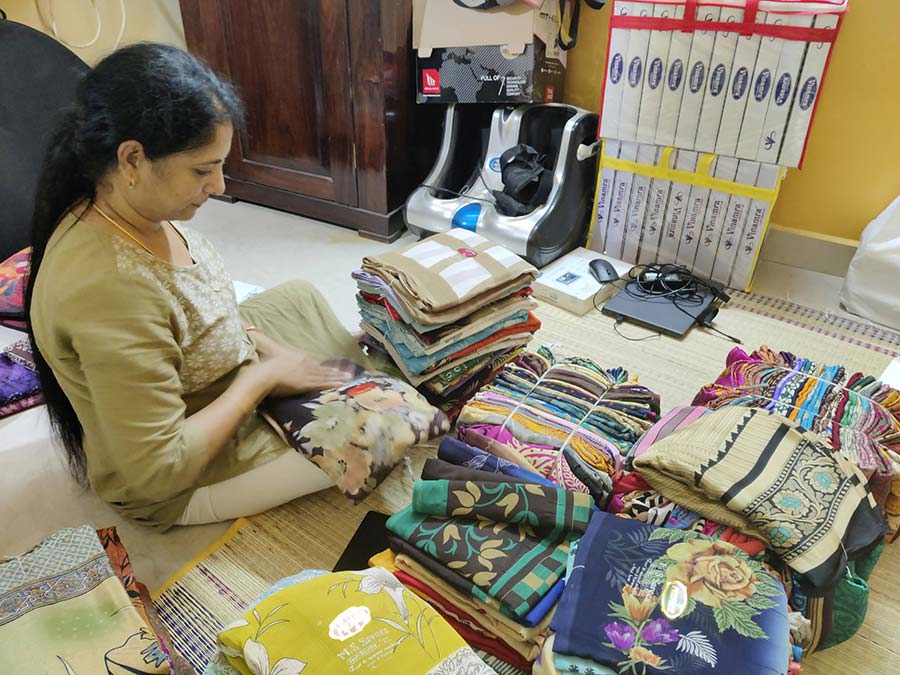
For the first year, the company worked on a trade basis, as Ramya worked out of one room in her house. With experience and communicating with other people, she realised how much the weaving community suffers. They didn’t have consistent business, and they made next to no profits. “We contacted weaving communities across Tamil Nadu and also from other parts of India for certain textiles, and began working solely with them from our second year. Our contract with them is that we take 50% of the sarees that they design, and the other 50% is the designs that we commission them to make for our brand. This way, it is ensured that they get paid monthly, without fail. All middlemen are eliminated; we are in contact with them directly. My main aim is to bridge the gap between the weavers and our customers. My love for sarees led me here, and I couldn’t be happier that I get to support weavers through Madras Sarees,” she smiles.
When it came to figuring out the tastes of the customers, she admits it was hard initially. “Now, we have a website and an app, so we can look and analyse the massive amounts of data to understand who is buying what. We can look at purchase history and design more of what sells well. Traditional saree shops have a set collection; you go, and you pick something off the rack. It is more than likely that you are compromising on either the colour or the design. For us, by analysing all the data and doing extensive polls on our social media, we design exactly what the customers are looking for. It’s custom-made for them, running low chances of compromising, as we provide several colour and design options. I feel like we stand out in the market because of that,” she smiles.
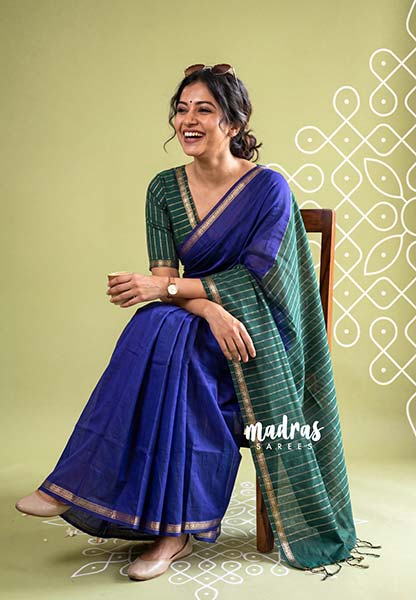
They sell exclusively on their website, one that they have built carefully to ensure a smooth shopping experience. Ramya says, “I feel like I am responsible for the quality checking, shopping experience, and customer service. If I list my products on other sites, and a customer has a query, they can’t contact us; they have to go through the marketplace, which is not what we want. We designed our website thoughtfully and curated an end-to-end experience. Photos for every single saree on our website are shot by our team, and every listing has a minimum of 4 photos, with a model photo as well. This way, the customer won’t face any surprises when they receive the package; the colours are 99% accurate. We want to change the mindset that saree shopping has to be a physical activity; you can shop the same way online! We don’t have any sudden tax additions or platform fees, either. What you see as the price is what you pay at checkout. These are some ways that we’ve built trust with our customers.”
She notes some memorable customer stories over the years—a doctor heading to the surgery room contacted her team, asking them to keep a saree aside for her; a 65-year-old mother watching their livestream and ordering sarees directly to the hospital to feel good even in her condition. This is why she keeps going. “I am motivated to work mainly for my girls and my customers. When I worked in tech, I had to solve problems for someone else. Now, I go hunting for problems and find solutions. That was a big shift in my mindset,” she smiles.
Madras Sarees is working on two highly innovative shopping experiences. One is India’s first digital saree kiosk, a machine that will sit in malls or places with high footfall. You can see the sarees on a bigger screen, zoom in and look at all the details before placing the order at the kiosk. The team will process your order from the central office and deliver it to your doorstep. The second, very exciting project is India’s first saree vending machine, which is mostly intended for IT parks, where people are so busy they don’t have time to shop. This will solve their problem! The brand is currently working on these projects and their prototypes, hoping to launch soon.
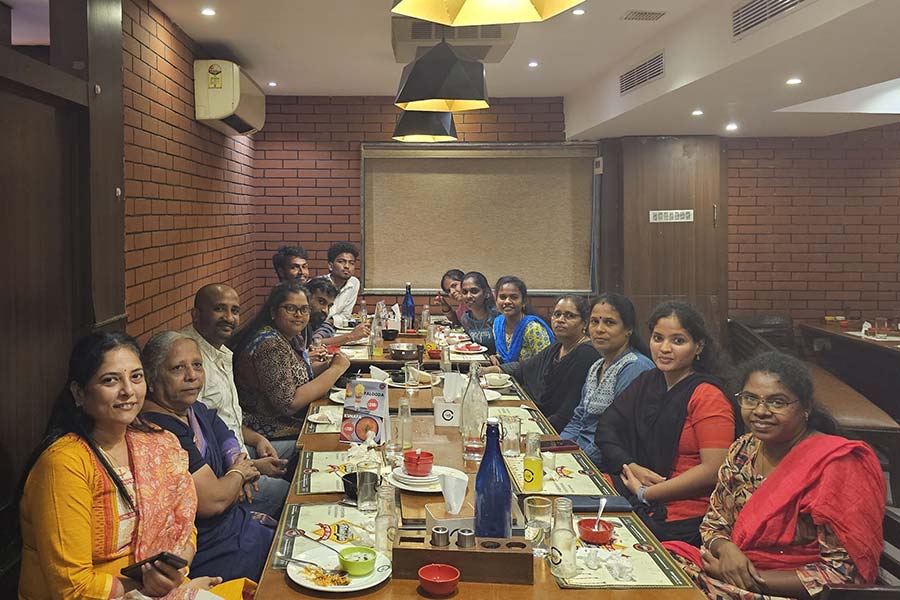 The Madras Sarees team