
Have you ever spent an hour looking for something that you stowed away ‘safely’? Do you search for something you use daily but is always missing? If your answer is yes, read ahead. Research says that humans, on average, spend over a year of their lives just looking for things. Smriti Bhatia sought to remedy this by starting The Sort Story, a professional home organising and decluttering company.
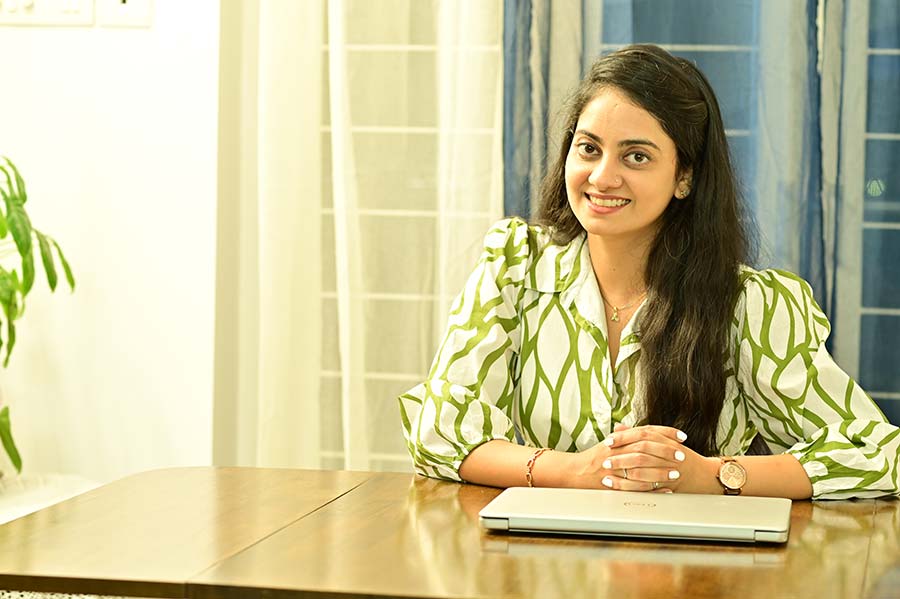
A home is a person’s sanctuary, and it should feel that way after a long day. You shouldn’t have to spend an hour cleaning up or scramble around to find something you thought was right there. Coming from a corporate background herself, following a 9-12 hour shift, Smriti Bhatia realised that things have to be automated when you get home from work, which means having foolproof systems in place. She is a certified professional organiser who started her company in 2020 to simplify people’s daily lives and homes. Whether you’re a working professional who wants to streamline your home or a homemaker who wants to organise your space better, The Sort Story has you sorted. This service is for people who want to be organised but don’t know where to start, people who know how to organise but don’t have time to, people who want aesthetics along with functionality, or anyone in between.
“I used to help my friends in college clean their rooms and organise their things. I had no idea a professional service like this existed at the time. I started an Instagram page in 2020 just to share tips and tricks because people were stuck at home during lockdown. That’s when I understood that this could become an actual career, so I got my certification and started The Sort Story—sorting your story and your home to feel like a place of peace. People either come to us during the design stage of a new house, which is ready to shift into, or they want to organise their existing space, which isn’t working efficiently for them. Busy professionals, growing families, senior citizens, or new homeowners make up the majority of our client base,” she says.
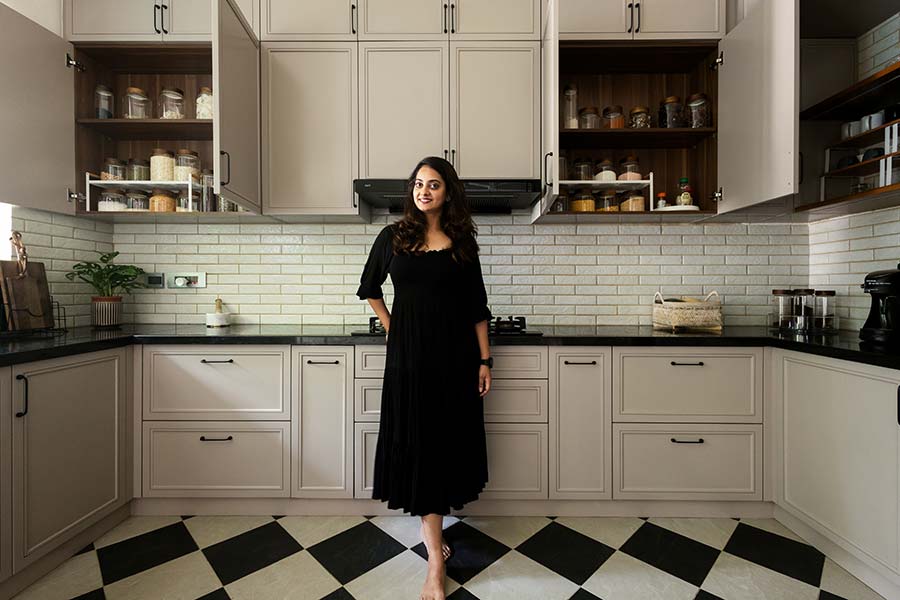
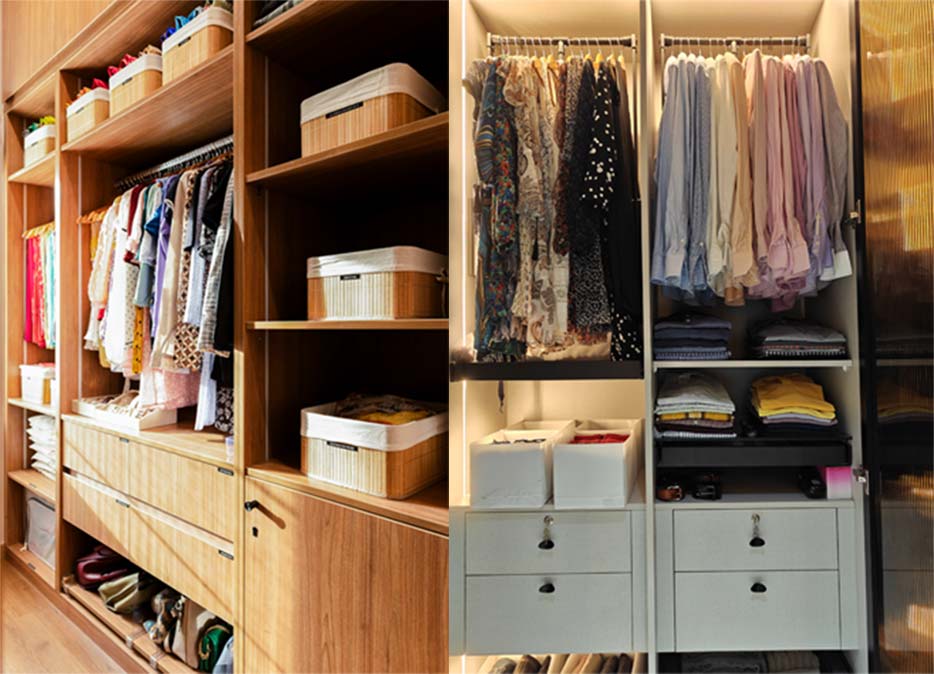
Her team has now worked with over 250 homes, and she says no two houses are alike. “The basic processes and planning are set, and the rest is personalised according to the client’s needs. Our main principle, one that really sets us apart, is that everything must have a dedicated home with visibility and easy access. Otherwise, things will be dumped into random places as always, and you’re back to square one. Wardrobes, for instance, usually have big shelves. We sort the items so the space is utilised to its maximum potential while ensuring nothing is hidden behind anything. Everything is visible in plain sight. We have designed strategies to bring organisation and productivity systems into place in the best ways possible, based on your unique circumstances,” Smriti explains.
Her role has evolved from organising every drawer or every shelf herself to designing the organisation systems, consulting on the homes, and training and leading her small, close-knit team of 7. “Every home needs a maintainable, practical system in place. We essentially align the systems with the client’s lifestyle; they shouldn’t be adjusting to the house, the house should adjust to them,” Smriti smiles.
The Sort Story team works with a reverse ABCD technique: DCBA, which stands for Decluttering, Categorisation, Brainstorming, and Arranging. “Decluttering is one of the most vital aspects of organising. If you’re not actually getting rid of clutter, you’re simply moving it around and calling it organising. The first natural step is to remove things that do not serve a purpose. A guiding principle is to get rid of things that you haven’t used in months, and don’t see yourself using in the next few months. Categorisation involves categorising and labelling items, so the client will never have to hunt again for that one missing pair of scissors or a pen. We work with the clients on a logical train of thought, where they will put things in their space on autopilot. A battery will likely be in the tech zone along with wires, cables, and adaptors. We put every single item out and then categorise it. Brainstorming brings us to rational conclusions of how the client wants their home organised, going hand in hand with Categorisation. Within categories, there are boundaries, which is where the fourth part—Arrangement—comes in. A stationery section will not have one big box where everything is dumped; we create separate sections for pens, pencils, paints, papers, in a way that your access and visibility are not compromised,” Smriti clarifies.
When there is a hindrance to something, it is highly unlikely that the system will be followed. “Take loose change as an example—if we’ve given you a box to put the change in, and the box has a lid, it is very plausible that you will see that as an extra step. If it’s a small bowl, however, it’s just one step, and that makes it easier for you to complete the act of putting away your coins. It might seem like a lot at first, and there is a bit of hard work involved on the client’s part, but once you get used to it, there’s no going back! You’re using your time better by not looking for things all the time,” she exclaims.
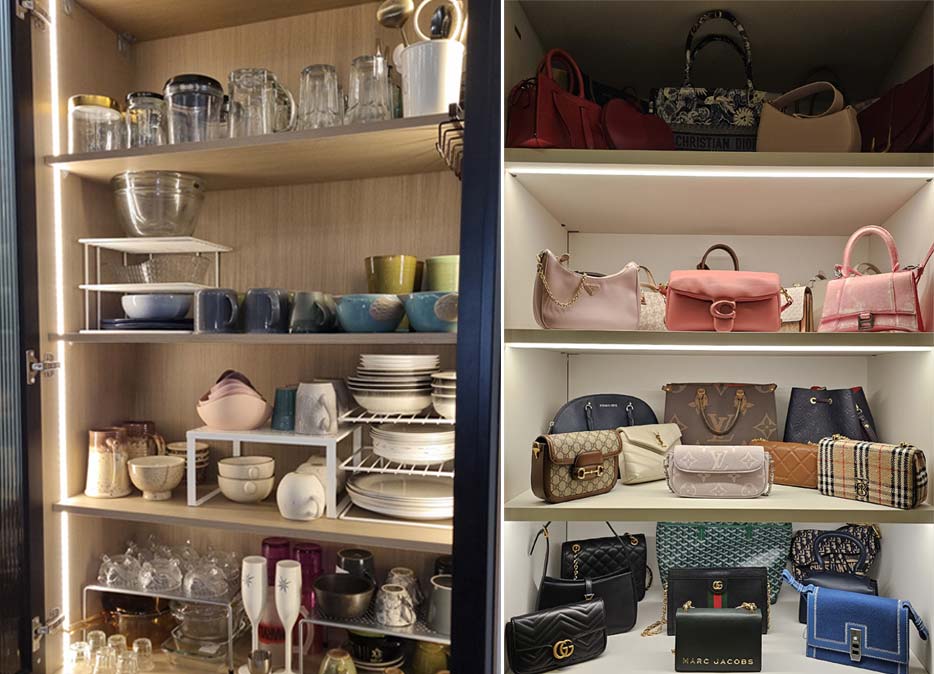
Coming to the arrangement itself, The Sort Story team plans everything down to a T. How many organisers, how many of each kind, what goes in what space—everything is taken care of. Hangers for big walk-in closets, baskets for smaller wardrobes; containment is important to create a lasting system. Smriti describes their philosophy, “The personalised systems of the houses and the people are taken into account before product procurement. We give the client the exact products and quantities to purchase before we do the arrangement with them. Aesthetics are a part of it, but not the core.”
When it comes to lessons learnt over the years, Smriti reflects, “People aren’t hiring us to save space; they’re hiring us to save time. They’re buying peace of mind. If I were to explain this further, I’d have to use wardrobes as a reference. We’ve worked with clients who barely have time to look up from their computers. We can’t ask them about every piece of clothing we find. We use our expertise now to categorise the clothes into practical categories, so they don’t have to depend on other people to pack their bags. If they have a flight to catch all of a sudden, they can pack their clothes instantly, because everything has been organised and labelled clearly. They can take full ownership of their time and be more productive.”
To conclude, she mentions her biggest motivators: “I wouldn’t call perfectly folded clothes the measure of my success,” she laughs. “Although they are very important, there’s so much more to what we do. The thing that pushes us the most is the feeling the clients have after we leave—they tell us they have less stressful mornings, or that they enjoy cooking now that their kitchen is sorted. People spending less time searching for things and more time together; that’s my testimonial.”